
Most HOAs keep their money in two main funds. Mixing them up is one of the most common financial mistakes new boards make, so this distinction is worth getting right early.
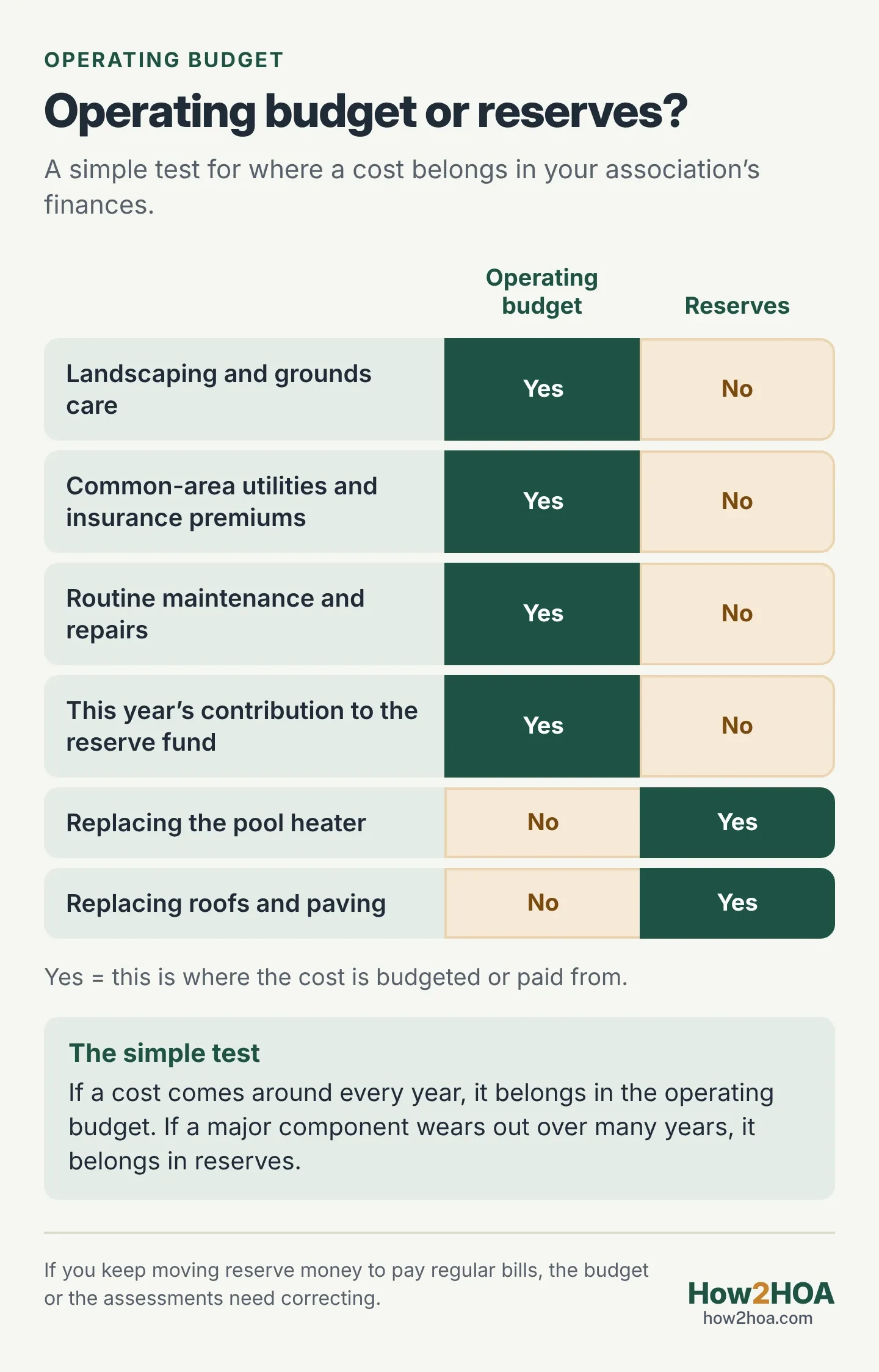
The operating fund pays for the regular, recurring costs of running the community this year. Think landscaping contracts, utilities, insurance premiums, management fees and routine repairs. These costs come up every month or every year.
The reserve fund is savings for major repairs and replacements that happen on a longer cycle. Roofs might last 20 or 30 years. Paving needs sealing every few years and replacement less often. Pool equipment, fences, gates and exterior paint all wear out on a schedule. The reserve fund builds up over time so the money is there when those projects come due.
A simple test: if a cost happens every year, it usually belongs in the operating fund. If it happens every several years and costs a lot, it usually belongs in reserves.
The two funds are typically kept in separate bank accounts. That separation makes it harder to accidentally spend reserve savings on everyday bills, which can leave the association short when a big repair arrives.
Key takeaways
- Operating fund: this year’s recurring costs
- Reserve fund: savings for major repairs on longer cycles
- Keep the funds separate so reserves aren’t spent on everyday bills
Want more detail? Read Understanding HOA Reserve Studies.