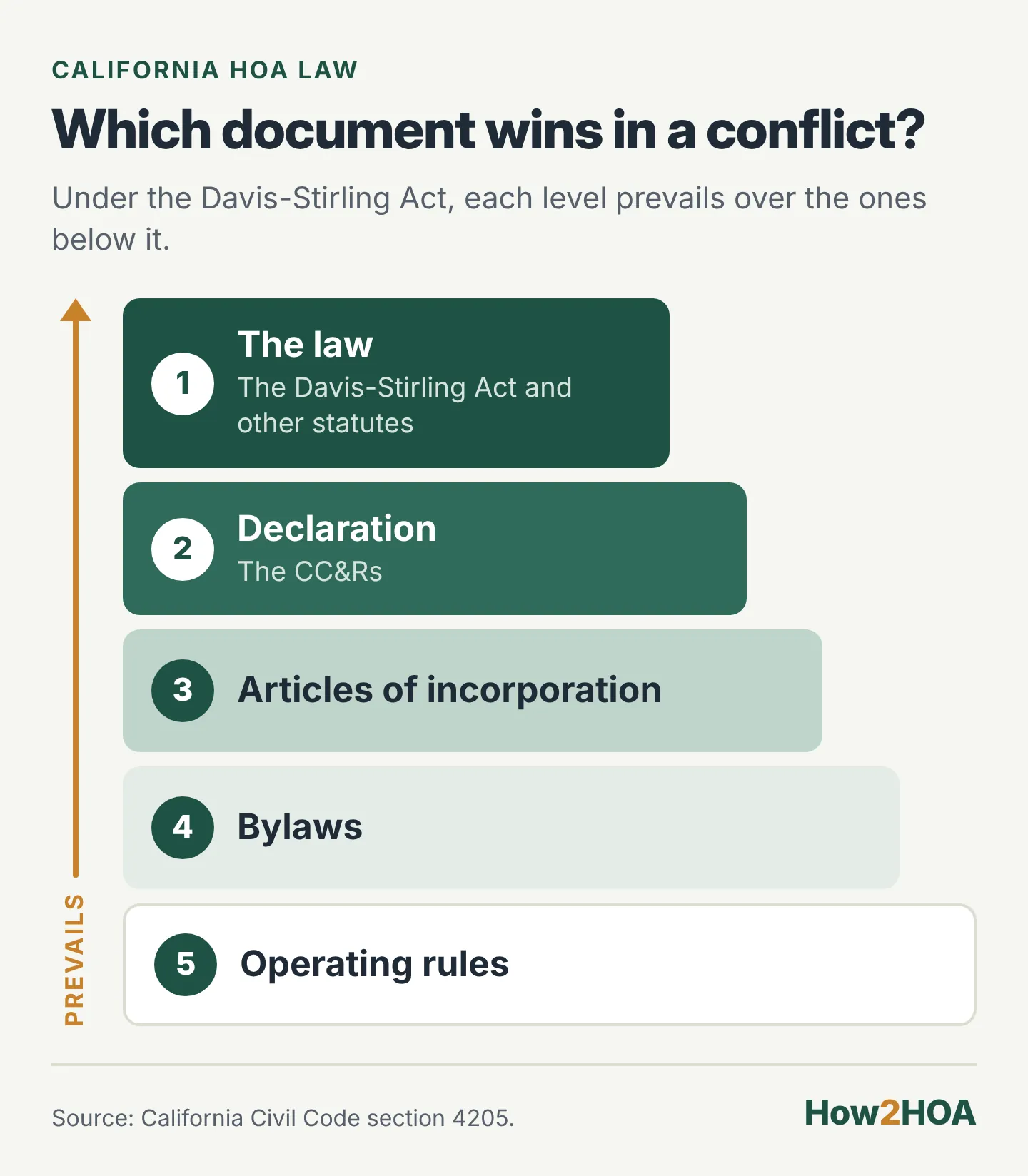

In California, the main HOA law is the Davis-Stirling Common Interest Development Act, usually just called Davis-Stirling. It was first enacted in 1985 and was reorganized in 2014 into its current home in the Civil Code, sections 4000 through 6150.
Davis-Stirling applies to common interest developments, which are condominiums, planned developments, stock cooperatives and community apartment projects (section 4100). If you serve on a residential HOA board in California, this law shapes much of your work.
The Act covers a wide range of topics, including:
- Which governing document controls when they conflict
- Open board meetings and owner comment
- Elections and secret ballots
- Owner access to association records
- Budgets, financial reviews and reserve studies
- Assessments, late charges, liens and collections
- Maintenance responsibilities
- Enforcement, fines and hearings
- Dispute resolution before going to court
You don’t need to memorize Davis-Stirling to be a good director. What matters is knowing it exists, knowing it often sets specific steps and deadlines and knowing to check it, or ask your manager or attorney, before taking actions like raising assessments, fining an owner or running an election.
Good practice: Keep a bookmark to the official text on the California Legislative Information website and use How2HOA’s California pages for plain-English explanations.
Key takeaways
- Davis-Stirling is California’s main HOA law, Civil Code sections 4000 to 6150
- It covers condos, planned developments, stock cooperatives and community apartment projects
- It sets steps and deadlines for many board actions
Want more detail? Read The Davis-Stirling Act Explained: A Plain-English Overview.
Free board tool: Try the California HOA Compliance Calendar.