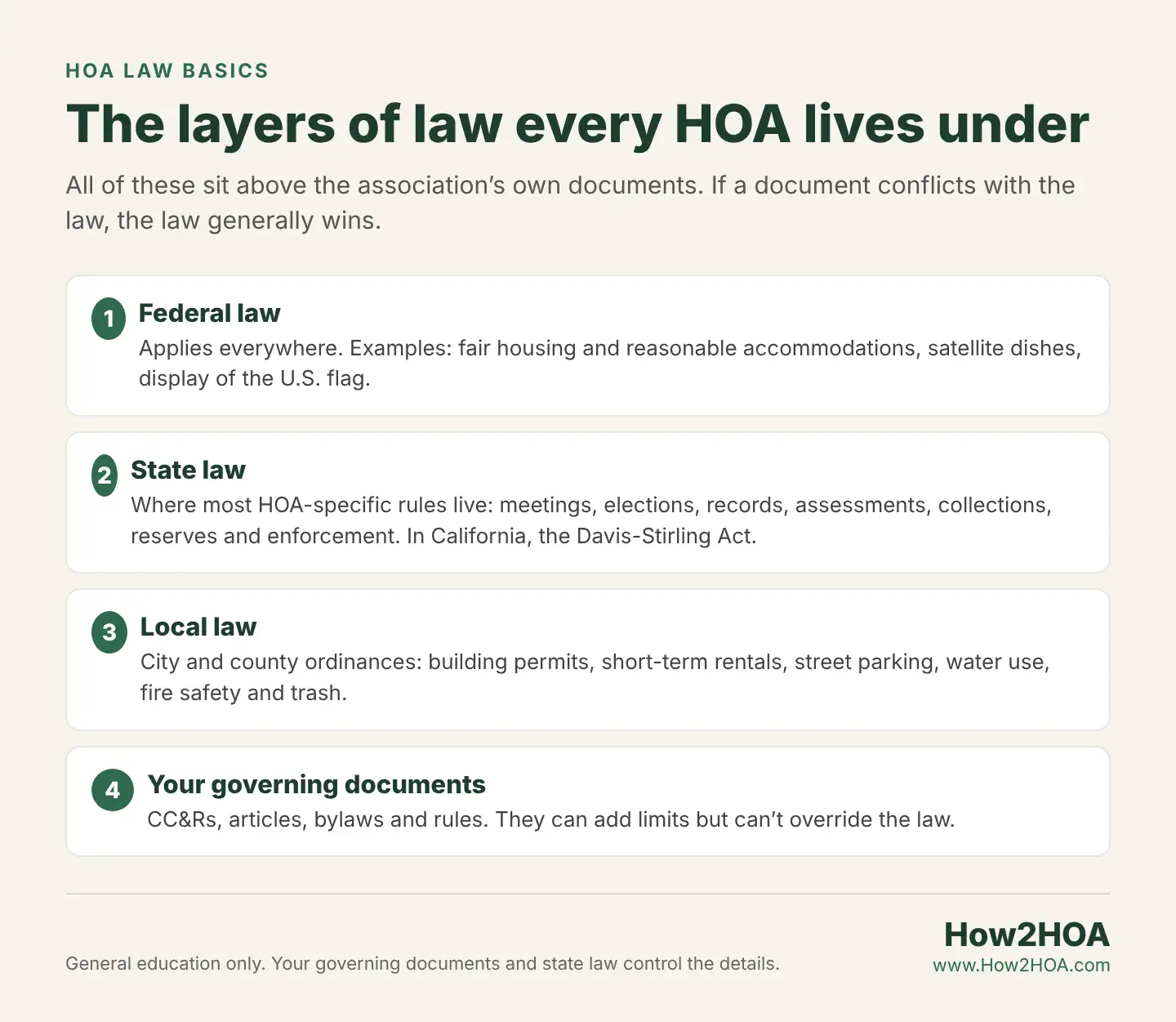

An HOA lives under several layers of law at the same time. Knowing the layers helps a board understand why some rules can’t be changed by a vote of the board or even the owners.
Federal law applies everywhere in the country. The most common example for HOAs is fair housing law, which bars discrimination and requires associations to consider reasonable accommodation requests from people with disabilities. Federal rules also touch areas like satellite dishes and the display of the U.S. flag.
State law is where most HOA-specific rules live. Depending on the state, it can cover meetings, elections, records, assessments, collections, reserves, insurance and enforcement. Many associations are also nonprofit corporations, so the state’s corporation laws apply too.
Local law includes city and county ordinances and codes. These can affect building permits, short-term rentals, parking on public streets, water use, fire safety and trash collection. Local rules apply to the association’s property just as they do to anyone else’s.
All of these layers sit above the association’s own documents. If a CC&R provision conflicts with federal, state or local law, the law generally wins.
Key takeaways
- Federal law covers areas like fair housing
- State law holds most HOA-specific rules
- Local ordinances affect permits, rentals, water and more
- All law outranks the association’s documents
Want more detail? Read Service and Support Animals in an HOA: What Boards Can Ask.