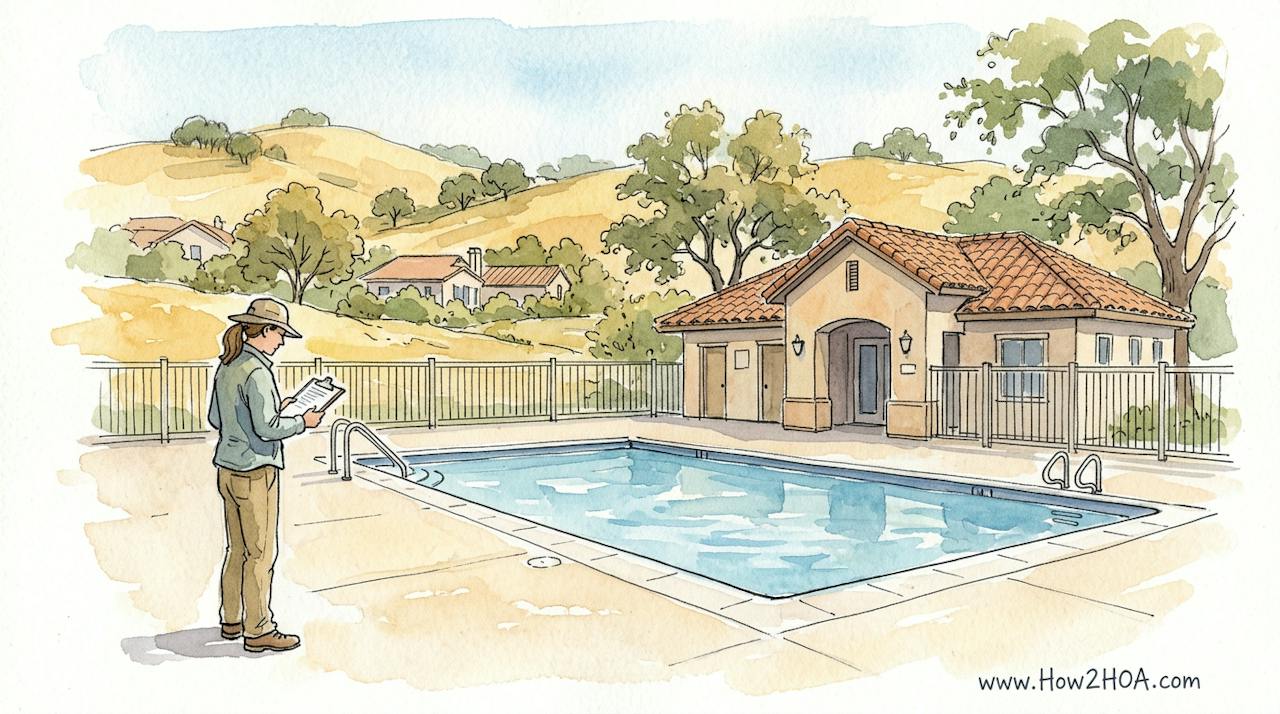

A reserve component is a specific item the reserve fund is saving for. Not every expense qualifies. Reserve components are usually the association’s responsibility, wear out on a predictable schedule and cost enough that saving ahead makes sense.
Common reserve components include:
- Roofs, gutters and exterior paint
- Asphalt paving, sealing and concrete
- Pools, spas and their equipment
- Fences, gates, walls and entry monuments
- Clubhouse interiors, furniture and fitness equipment
- Elevators, plumbing and building systems in condos
- Irrigation systems, lighting and playgrounds
Each component in a reserve plan gets three key numbers: its useful life (how long it lasts when new), its remaining life (how many years until it needs work) and its replacement cost. Those numbers drive how much the association should save each year.
What’s usually not a reserve component? Routine, yearly costs like landscaping contracts or minor repairs. Those belong in the operating budget. Items owners maintain themselves are also left out.
A reserve specialist inspects the property and builds this list in a document called a reserve study, which later courses cover in detail.
Key takeaways
- Components are major items with predictable lifespans
- Each has a useful life, remaining life and replacement cost
- Routine yearly costs belong in the operating budget instead
Want more detail? Read What Is a Reserve Specialist? How to Hire One for Your HOA.
Free board tool: Try the HOA Reserve Study Proposal Checklist and Calendar.